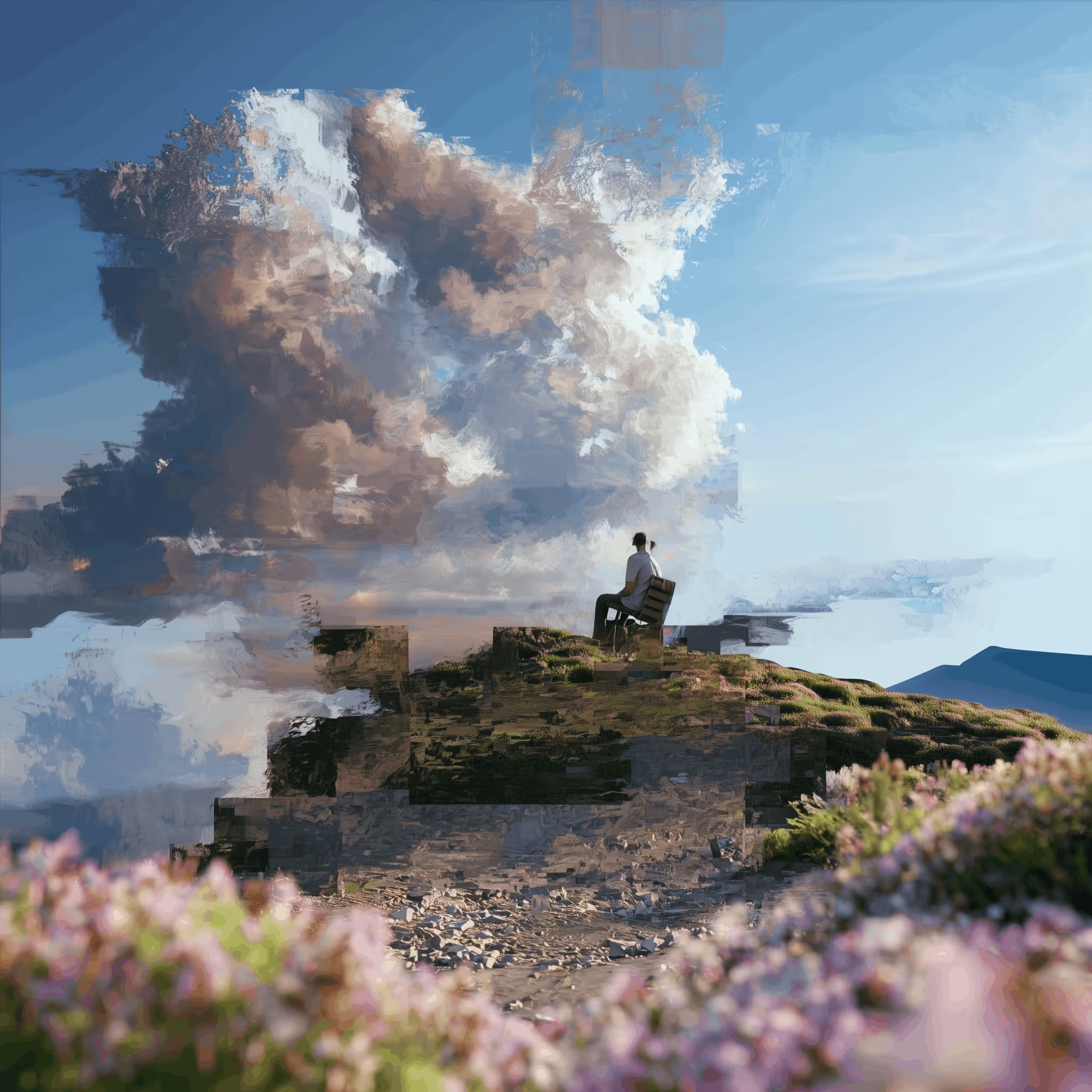
Photography guides. Then & now
A 1990s brand book had two pages on photography. The ones being written now are getting noticeably longer.

A photography section in a brand book used to be small. A page, maybe two. A handful of example images, a paragraph or so of direction. Warm. Natural light. Real people. The kind of guidance a photographer could read on a Tuesday morning and turn into a Wednesday shoot.
The newer ones being put together are bigger. Six pages, sometimes ten. Specific in ways the older ones weren't. Lens length called out. Lighting setups described. Subject positioning given as proportions of the frame. Colour temperature ranges. What kinds of crops are allowed and what kinds aren't. Whether motion blur is acceptable and where. Whether eye contact with the camera is part of the brand or a thing the brand doesn't do.
Most of the reason is that the audience for the document has changed. A brand photography section in the 90s was being read by a photographer. Now it's being read by a photographer, a marketing person who'll be generating supplementary images in Midjourney for a launch landing page, a junior designer who'll be art-directing a stock library search, and to some extent the tools those people are using.
"Warm, natural light, candid moments, neutral backgrounds" doesn't direct a tool. It barely directs a person who hasn't done it before. It works as a sense memory for someone who already knows what those words mean.
The closest analogue to what the newer documents are doing is probably the way film productions brief shots. A DOP arrives on set with a shot list, references for lighting, lens choices for specific scenes, sometimes a colour script. The level of pre-planning is high because the cost of reshooting is high. Brand photography didn't always need that. A shoot day was a shoot day, and the photographer brought a lot of the judgment with them. The newer briefs assume less and specify more, partly because the people downstream of the brief might be working with very little context.
For generative tools the specificity is doing different work. A prompt for Midjourney that includes "shot on a 50mm lens at f/2.8, soft natural window light from the left, subject three-quarters in frame, slight motion blur on the hands" returns something much closer to a brand than "warm, natural light, candid moments" does. Whether the result is good enough to use is a separate question, but the brief is starting to look the same regardless of whether the output is going to come from a person or a model.
The harder thing to get into a document is the small stuff. The pause before someone looks at the camera. The slightly-off framing that makes a shot feel less staged. A photographer with twenty years in editorial knows when to break the rules. Writing those exceptions down doesn't really capture them. So the documents are getting more specific but there's still a fairly visible gap between what you can put into a brief and what someone good will do with it. That gap might be where the value of human photographers actually sits now, rather than in the basic execution.
There's a knock-on effect for how a brand's photography library gets organised. The older format of a folder of approved images works less well when the team is going to need to generate more images later. So some of the newer libraries are being structured with metadata that's halfway between an asset library and a prompt history. Each image tagged with its setup, its lens, its lighting notes. The library doubles as a reference for anyone briefing further work, human or otherwise.
It's the kind of shift that's been happening for a couple of years quietly. Not flashy, not really anyone's headline trend. The thing you notice when you compare what you were writing in 2021 to what you're writing now.
One small note. The older photography sections weren't actually bad. They worked because the person reading them was qualified to interpret them. The new specificity isn't an improvement so much as a response to a different reading audience.

.avif)